Written by: Emily Hendricks, Creative Director
I haven't had FOMO like this in a while.
While listening to Ted Sullivan walk through his time at City Nation Place, one quote stuck with me: “Place brands aren’t created. They’re revealed.”
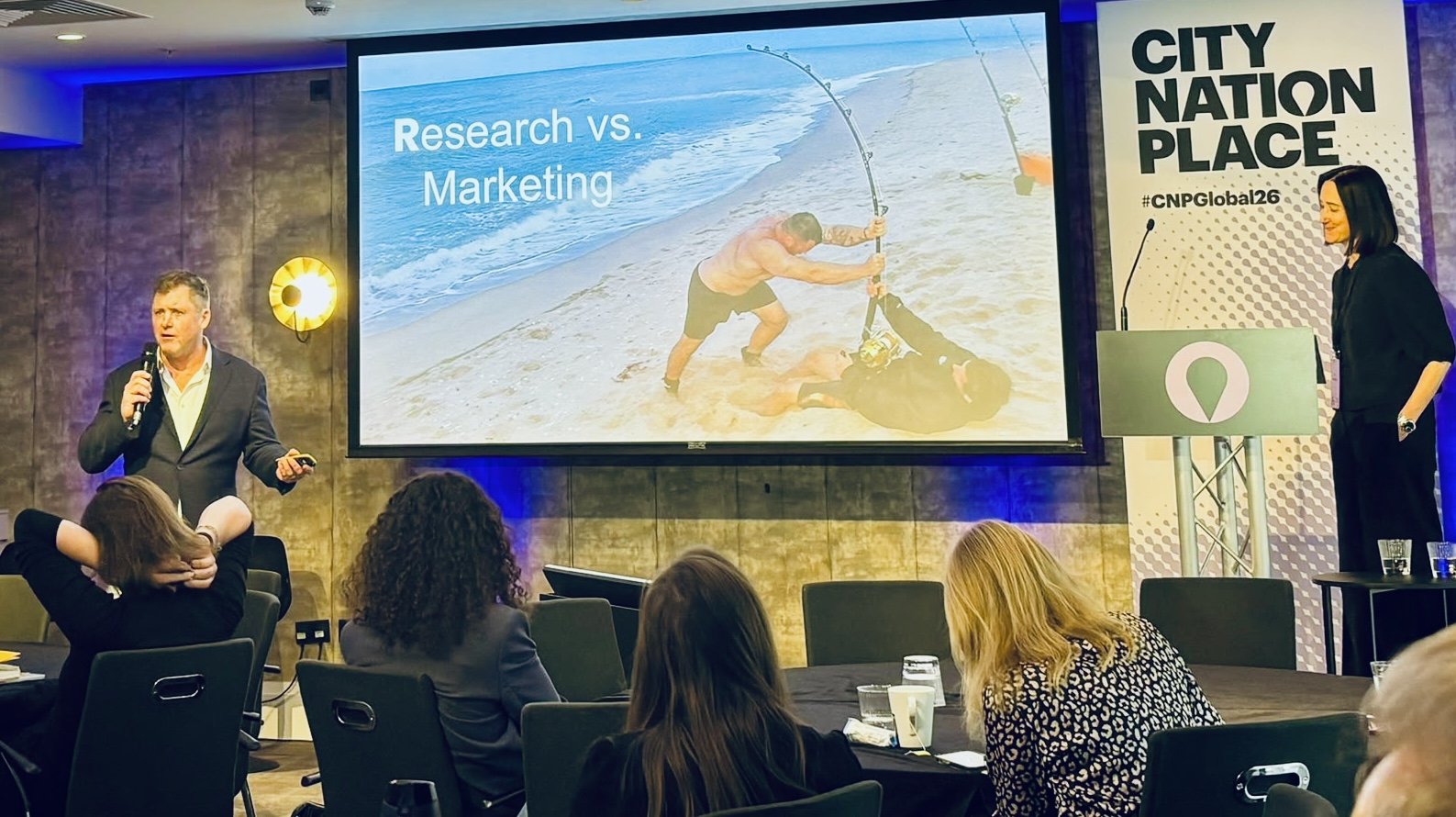
I'm a Creative Director. I spent five years in-house at a DMO before moving to a tech company and eventually going out on my own. I love tourism conferences: the crowd, the energy, the people who spend endless amounts of time and energy into making them happen. But hearing Ted talk through the place branding sessions he sat in on, I had to ask: why don't more tourism conferences teach us how to do the revealing part of place branding? And why didn’t I go to City Nation Place this year?!
The foundations are missing from the agenda
A couple of weeks ago, Explore Minnesota hosted a continuing education webinar on place branding with City Nation Place. It was brilliant (and apparently I now need to join the accelerator course). It was also a reminder… we can't get the most out of the flashy new tools and AI that dominate conference agendas until we can clearly define and explain our destination's brand story.
So where are the foundations? Why does so much of the stage go to what's new and shiny, when so many organizations are still working to hone the basics of destination marketing?
The timing matters, too. I've seen more DMO title changes on LinkedIn that include the word "brand" than ever before. (Being a "Chief Brand Officer" has always been a dream of mine, so I'm watching this shift with excitement.) If brand is finally clawing its way to the leadership table, it deserves a bigger place on the conference agenda.
Let's be real about the case studies
Stop giving me examples from only the big destinations. Of course they do place branding well. They have the team, the budget, a clear destination product, and a large agency dedicated to finding a unique perspective. They deserve the credit and the awards.
But what about the suburban DMO with a small team and a big heart? They can't see themselves in those examples.
I've always been more inspired by scrappy teams who do big things with small budgets. Who's doing brand right without a big agency behind them, and how? I want to walk out of a session with creative energy, not feeling deflated after hearing about another big city's triumph.
Show us the decisions, not just the deliverables
Too many sessions are deck after deck of "We did this, and it was great! You should do something like it." I walk out feeling inspired, without a clue how to apply it to the clients I work with.
A campaign recap tells you what one organization did. A meaningful session shows you how they made their decisions, so you can make better strategic decisions of your own.
What if we saw the questions a team used to find the most important story their destination needed to tell? The criteria behind their agency selection? The internal disagreements that shaped the brief, or the idea they rejected before landing on the final direction? Who truly led the work, not just who's presenting it?
Those details are not side notes. They are the part of the work the industry can learn and grow from.
Without them, the takeaway becomes "They ran a successful social campaign, so we should too." But your destination may have a completely different audience, budget, internal structure, or community relationship.
Copying just the output skips the thinking and strategy that made the output effective.
Can we rethink the deck?
If a session is just slides, how different is it from a webinar? Look around any conference room, and you'll see people working on laptops and phones while "listening."
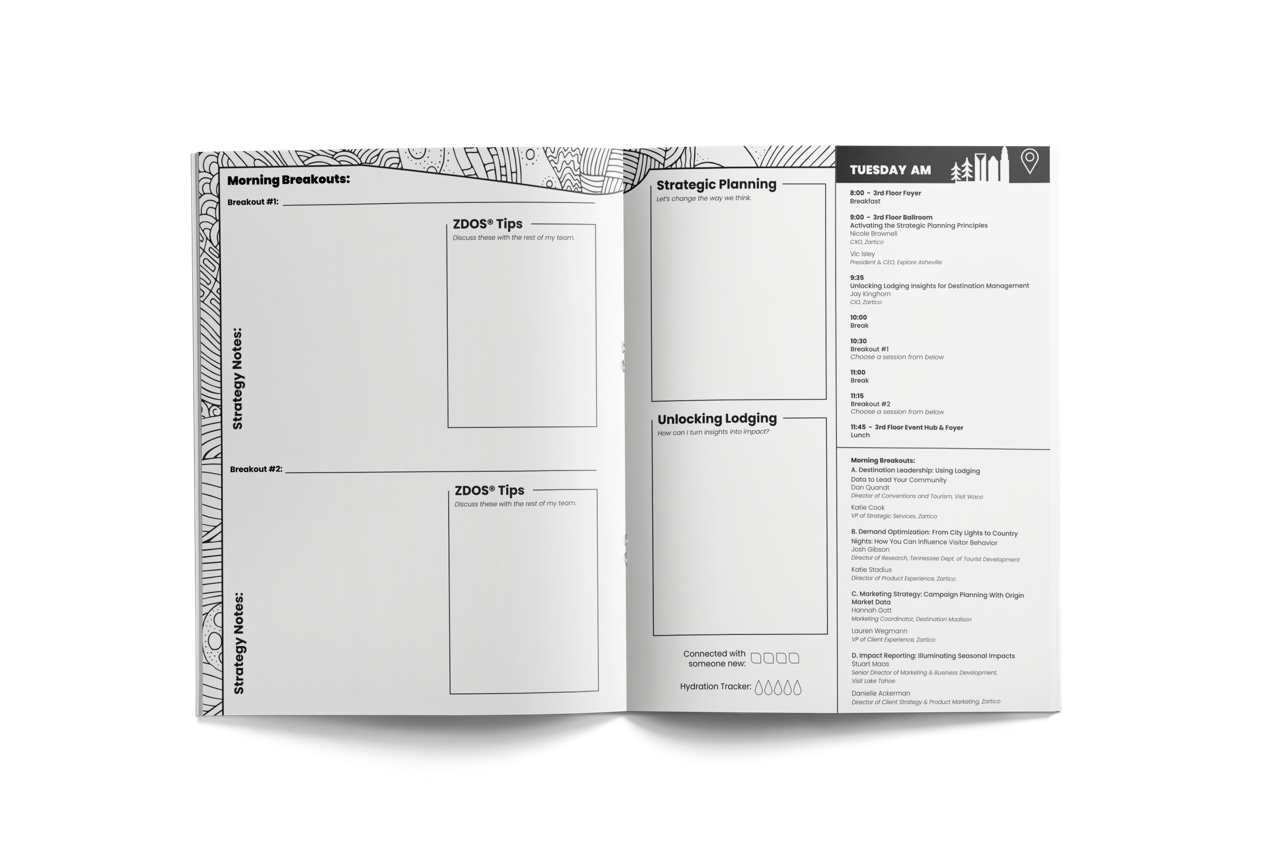
There is magic in being in person. There is magic in talking with the people next to you, interacting with speakers, putting pencil to paper. When I was at Zartico, we created workbook-style agendas for their user conference, Zarticon, with coloring pages, note-taking prompts, and colored pencils. I still get positive feedback on that project. It got people off their screens and into the session. While this didn’t replace decks, it did give people prompts to write down what they were learning.
In a world where AI is taking the “Think” out of every process, let’s challenge each other to use our collective brain power and humanity to use an analog solution to solve these problems together, while we are sitting next to each other in-person.
What applicable sessions could look like
The real opportunity is to design sessions where every person leaves with something tangible they can adapt to their own destination or organization. Let’s truly challenge attendees to listen, interact with their neighbors, and make these conferences educationally worth the time and money.
That might look like:
A framework for deciding whether a challenge is a brand problem or a marketing problem
A live walkthrough of turning research and stakeholder input into a useful creative brief
A brand strategist running a real stakeholder workshop, so attendees hear the questions that get helpful input
A candid conversation about what didn't work, why, and what the team would change
As a vendor, this can feel like giving away the secret sauce. But I believe there is magic in sharing a peek behind the curtain.
The goal is not to give everyone the same answer. It is to give them a better process for finding the answer that fits their organization.
From inspiration to application
Inspiration has a place at conferences. We need to see ambitious work and what's possible. But inspiration is more powerful when it's paired with application.
Show us the campaign, and the choices behind it. Give us the polished case study, and make room for the complicated middle.
The best conference session shouldn't simply leave attendees thinking, "That was a great campaign."
It should leave them thinking, "I know what conversation to start when I get home."